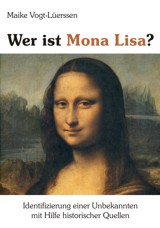
Wer ist Mona Lisa? – Identifizierung einer Unbekannten mit Hilfe historischer Quellen
als Buch bei amazon.de: 172 Seiten, mit Stammtafeln und 136 Bildern (130 Bilder in Farbe), Independently published, 1. Auflage, ISBN 978-1-9831-3666-5, € 29,31

Vielen Dank, meine lieben Leser und Leserinnen, dass Sie mir durch den Kauf meiner Bücher helfen, meine Geschichtsstudien weiterführen und das Betreiben dieser Webseite finanzieren zu können. Sie können meine Bücher übrigens durch Amazon weltweit, z. B. in Deutschland, Großbritannien, Frankreich, Italien, den USA, Australien und in Japan, erwerben. Das obige Foto von mir stammte aus dem Jahr 1970. Die Disziplin Geschichte war schon immer meine große Leidenschaft.
Thank you so much, my dear readers, for helping me to continue my historical studies and to finance this website by purchasing my books. By the way, you can buy my books worldwide through Amazon, for example in Germany, Great Britain, France, Italy, the USA, Australia, and Japan. The photo above was taken in 1970. History has always been my great passion.
Elisabetta wurde am 25. Oktober 1692 als zweites Kind des Prinzen Odoardo Farnese von Parma und Piacenza geboren. Ihr älterer Bruder Alessandro Ignazio (1691-1693) lebte nur zwei Jahre. Elisabetta starb hingegen mit 74 Jahren am 14. Dezember 1766. Mütterlicherseits war Elisabetta eine Nichte von Maria Anna von Pfalz-Neuburg (1667-1740), der zweiten Gattin des spanischen Königs Karl II. (1661-1700), und eine Nichte von Eleonore Magdalene Therese von Pfalz-Neuburg (1655-1720), der dritten Gattin des Kaisers Leopold I. (1640-1705), und somit durfte Elisabetta sich als eine Cousine der Kaiser Joseph I. (1678-1711) und Karl VI. (1685-1740), des Vaters der berühmten Kaiserin Maria Theresia (1717-1780), beschreiben.
Charakterlich hatte Elisabetta von allen ihren Verwandten etwas geerbt, so z. B. von ihrem Großvater, dem Herzog Ranuccio II. von Parma und Piacenza (1630-1694): "It may have been from him that his grand-daughter inherited her boasted propriety [ihren Anstand], her passion for building, her interest in manufactures, and her patronage of religious orders." Ihr Verhältnis zu ihrer Mutter war nicht gut: "Elisabeth entertained for the duchess [ihrer Mutter], at most, a decorous regard." Aber ihren Stiefvater und Onkel Francesco Farnese (1678-1727), den Herzog von Parma und Piacenza, liebte sie aus ganzem Herzen. Aus ihrer Kindheit erfahren wir bezüglich ihrer Erziehung Folgendes: "Poggiali [der Historiker von Piacenza] eulogises the sprightliness of her intellect and the extraordinary directness of her thought. She could speak and write Latin, French, and German. After studying grammar, rhetoric, philosophy, and the use of the globes, she would spend many hours a day over her books, religious, historical or biographical. Her step-father [Francesco] speaks of her great abilities ... She had been most fortunate in her dancing master, a Frenchman; she had been taught painting by Pierantonio Avanzini. Music was always a delight to her; but her favourite employment was embroidery. The girl was strictly brought up, confined, says S. Simon, to an attic in the palace of Parma." Und sie liebte die Jagd, wie ihr jagdbegeisterter Gatte Philipp V. schon sehr bald zu seiner großen Freude feststellte: "On Thursday last [im Januar 1715] the queen [Elisabetta Farnese] in gentleman's attire went a-hunting, and killed two stags and a boar, and shot from horseback at a rabbit running, leaving it stone dead, to the admiration of the king [ihres Gatten Philipp V.] and bystanders on seeing her Majesty's extraordinary agility and skill." (in: Edward Armstrong: Elisabeth Farnese – "The Termagant of Spain", id., pp. 4-5/40). Und Elisabetta Farnese war sehr ehrgeizig, besonders was ihre eigenen Kinder betraf. Schließlich hatte sie es im Geheimen Vertrag von Wien im Jahr 1725 z. B. geschafft, dass ihr ältester Sohn Karl III. der Gatte von Maria Theresia, der zukünftigen Kaiserin, werden sollte. Karl III. hätte also zum Kaiser des Heiligen Römischen Reiches deutscher Nation aufsteigen können, wenn, ja wenn, Kaiser Karl VI. sich an diesen Vertrag gehalten hätte: "Reading Articles 2 and 3 of the Secret Treaty together, it seemed clear that Maria Theresa was destined for Don Carlos [Karl III.], and doubt only remained as to which archduchess [Maria Anna (1718-1744) oder Maria Amalia (1724-1730)] should be granted to Don Philip [das vierte Kind von Elisabetta Farnese, ihrem Sohn Philipp (1720-1765)." (in: Edward Armstrong: Elisabeth Farnese – "The Termagant of Spain", id., p. 226). Aber immerhin konnte Elisabetta Farnese es erreichen, dass Karl III. im Jahr 1731 der nächste Herzog von Parma und Piacenza wurde.
Elisabetta musste wie alle Kinder ihrer Zeit viele gefährliche Krankheiten überleben: "Elisabeth escaped the plague, but was attacked by small-pox of so virulent a type that, notwithstanding her strong constitution, she ran grave peril of death, and her face remained notably scarred. The malady which marred her beauty went night to mar her matrimonial prospects. But she was not void of substantial attractions, and, therefore, not without suitors." (in: Edward Armstrong: Elisabeth Farnese – "The Termagant of Spain", id., p. 7). Als zukünftige Gatten waren der Prinz von Piemont, ein Cousin ihres Vaters und ihres Onkels Francesco, Francesco III. d'Este (1698-1780), und der Prinz Pio della Mirandola im Gespräch.
Der Prinz von Monaco beschrieb Elisabetta auf ihrem Weg zu ihrem Gatten nach Spanien gegen Endes des Jahres 1714: "She [Elisabetta] is of medium height and has a good figure: the face long, rather than oval, much marked with small-pox; there are even some scars, but all that is not disagreeably prominent. Her head is nobly set on her shoulders; she has blue eyes, which, without being large, are as sparkling as can be; she can say everything with them. The mouth is rather large, beautiful by admirable teeth, which are often disclosed by the pleasantest of smiles. Her voice is charming. Her conversation with every one is gracious, and is said to be prompted by the heart. She is passionately fond of music; sings and paints very prettily; can ride and hunt; Spanish is the only language which she does not know. Lombard heart and Florentine head; her will is extremely strong." (in: Edward Armstrong: Elisabeth Farnese – "The Termagant of Spain", id., pp. 21-22).
Aber wie sämtliche Mitglieder ihrer Farnese-Familie liebte sie das Essen: "She [Elisabetta Farnese] was growing fat [schon zu Beginn des Jahres 1715] ... Her appetite was excellent. Elisabeth Farnese ... ate largely, and was not ashamed. She was dissatisfied with the royal table and with Spanish fare. The late queen [Maria Luisa von Savoyen (1688-1714), die erste Gattin von Philipp V.], she said, was a Piedmontese, and ate nothing; she herself was Lombard, and her people ate double and more. For long she made requisitions on Alberoni's kitchen for beans à la Lombarde, and the post from Parma rarely failed to bring Italian delicacies." (in: Edward Armstrong: Elisabeth Farnese – "The Termagant of Spain", id., p. 41). Vom Kardinal Giulio Alberoni (1664-1752), einem wichtigen politischen Berater ihres Gatten, erfahren wir auch, dass Elisabetta Farnese sehr träge war: "'Our conversations begin to be on indifferent topics and merely to pass the time, for I [Alberoni] recognise to my very great grief that it begins to bore her [Elisabetta Farnese] to talk of business. I observe her to be indolent in society, and yet more indolent in solitude (geschrieben am 4. März 1715).' ... Notwithstanding her indolence, she was greedy of glory and applause ... 'Her love of glory,' wrote her step-father [Francesco Farnese], 'will be the best bait with which to tempt her.'" Und Elisabetta Farnese war extrem verschwenderisch, obwohl es ihren spanischen Untertanen finanziell sehr schlecht ging: "Her extravagance, moreover, was likely to lead to trouble. She spent largely upon herself, upon jewellery and dress, and still more largely upon others. She burdened her income with lavish charges in favour of her ladies-in-waiting, or charitable and religious objects." (in: Edward Armstrong: Elisabeth Farnese – "The Termagant of Spain", id., pp. 42-43/47).
Urteil über Elisabetta Farnese laut den Aussagen von Kardinal Giulio Alberoni: "She [Elisabetta Farnese] was indolent, but yet ambitious, resolute at a crisis, negligent in everyday life. She loved popularity, yet would take no trouble to acquire it. Her pride, as her familiarity, was the result of a somewhat vulgar nature. ... Alberoni has left a sketch of the Queen's daily life ... The queen and her husband at this time [um 1715] retired to rest at half-past ten. At eight in the morning they took light refreshment in their bed. Philip then rose, and the queen remained in bed for two hours and a half, saying her prayers, reading despatches and French books. After Mass and dinner the royal pair would spend an hour together. The king then went a-hunting; and if the queen did not accompany him, Alberoni would entertain her. On Philip's return they took a slight repast and talked or despatched business until supper at eight. Both king and queen took an early dislike to Madrid. They preferred the Pardo or Aranjuez, where the sport was at their doors. Aranjuez was notoriously unhealthy, and Alberoni warned the queen that if any mishap should befall her step-sons the world would say that the spot had been selected for the purpose." (in: Edward Armstrong: Elisabeth Farnese – "The Termagant of Spain", id., pp. 47-48).
Das Herz ihrer neuen Untertanen in Spanien konnte sie im Gegensatz zu ihrem Gatten nicht gewinnen. Man mochte sie nicht, was schließlich auf Gegenseitigkeit beruhte. So äußerte sie: "Die Spanier mögen mich nicht, aber ich hasse sie ebenfalls." (in: Edward Armstrong: Elisabeth Farnese – "The Termagant of Spain", id., p. 155).
Elisabetta Farnese (verfügbar bis 23. Oktober 2027)
Beschreibung von Elisabetta Farnese in den Jahren 1718 und 1721 von dem berühmten Memoirenschreiber Louis de Rouvry (1775-1755), dem Herzog von Saint-Simon: "The Queen of Spain has such grace in her figure, in everything that she does and says, in the play of her wit and in her manners, she is so natural, moreover, and so evidently at her ease, that in a few minutes the injuries wrought by the smallpox are forgotten; her charm and the impression of her intelligence are only increased. The latter, however, would have a better and a wider range, but for the total absence of all culture and education. Her familiarity, great as it is, never detracts from her dignity, and only serves to make her lovable." (in: Edward Armstrong: Elisabeth Farnese – "The Termagant of Spain", id., pp. 139-140).
"In the Court of Spain religion was an important factor. The queen carefully observed the practices of her own, and of her adopted country, but she had none of the scruples of the king [ihres Gatten Philipp V.], and he never could inspire her with his liking for the Jesuits, nor would she confide to her confessor other secrets than her sins. She was proud, and passionate to violence ... Her ignorance ... was incurable. She could neither be taught nor educate herself. For this reason and from natural disposition she was not a good woman of business, and was confused by details. Nevertheless, she liked power, she wished to know everything and to have share in it, though appearing not to do so. Italy and all Italians were dear to the queen, though her love for her parents was, S. Simon [Saint-Simon] believed, more the result of good breeding and family pride than of affection. ... Passionately fond of her children from affection and policy, it was already clear that she would lend herself to any measures which would further their advancement. Her apparent attachment to her husband was such that she seemed to forget herself. Her actions, her conversation, her broad, unceasing flattery, were all directed to give him pleasure. In meeting his every wish, she was so easy and so natural, that she deceived spectators into thinking that she really liked the task, ceaseless, dangerous, and tiresome as it was. For Philip's pleasure she had to devote herself day after day to hunting, whether she was well or ill, whether her confinements were approaching or scarcely over. ... Naturally gay, good tempered, and sympathetic ... could mimic to perfection. Yet her fun was almost always kindly. Her manners were unequal and sometimes rough. ... Any kind of affectation was Elisabeth's abhorrence, and dissimulation she practised as little as possible. Nor did she like the artificial additions to her toilet which etiquette and the king's taste compelled her to adopt. ... she spoke openly of her defects of appearance and character ... made no concealment of her preference for men's society. ... Her most feminine characteristic, says S. Simon, was her love of amusing herself with all kinds of birds and beasts, which, he adds, were not perhaps without value to her in the extreme retirement in which she lived." (in: Edward Armstrong: Elisabeth Farnese – "The Termagant of Spain", id., pp. 140-141).
Am 24. Dezember 1714 wurde Elisabetta Farnese mit dem spanischen König Philipp V. (1683-1746) verheiratet. Sie war seine zweite Gattin und schenkte ihm sieben Kinder, von denen sechs das Erwachsenenalter erreichten: 1. ihr Sohn Karl III. (1716-1788), 2. ihr Sohn Francesco, geboren am 21. Januar 1717 - er starb bereits einen Monat nach seiner Geburt, im Februar 1717 -, 3. ihre Tochter Maria Anna Viktoria (1718-1781), die zukünftige Königin von Portugal, 4. ihr Sohn Philipp (1720-1765), 5. ihre Tochter Maria Theresia (oder Maria Teresa) (1726-1746), 6. ihr Sohn Luis Antonio (1727-1785) und 7. ihre Tochter Maria Antonia (1729-1785), die zukünftige Herzogin von Savoyen und Königin von Sardinien.
mit ihrem ersten Sohn Karl III. (rechts) und ihrer ersten Tochter Maria Anna Viktoria (links) und einem Gemälde, das die Gattin ihres älteren Stiefsohnes Ludwig I. (Louis I.), die französische Prinzessin Louise Elisabeth d'Orléans, wiedergibt
"The king and queen [Philipp V. und Elisabetta Farnese] never occupied a separate bedchamber nor a separate bed. The latter was scarcely four feet wide, was a four-poster, and, according to Spanish fashion, very low. No night was ever spent apart. Towards 9 A.M. the curtains of the bed were drawn by the azafata. Behind her appeared a valet bearing a basin of gruel composed of broth, wine, milk, and yolk of egg, sweetened with sugar, and flavoured with cinnamon and clove. It was white, greasy, and very hot. While the king drank this the azafata brought to the queen her tapestry, enveloped the royal persons in their dressing-jackets, and placed upon the bed the papers lying on the chairs. The king and queen then said their prayers and read books of devotion; for secular works had been discarded, and no more is heard of French romances. Grimaldo, at a stated hour, appeared at the door; but sometimes the king would beckon to him to wait until the prayers were finished. The minister spread out his papers on the bed, drew his writing case from his pocket, and discussed public business; for the queen's work did not disable her from giving an opinion. The valet, on seeing Grimaldo retire, gave notice to the azafata, on which she brought to the king his slippers and dressing-gown. Retiring to his dressing-room, he was attended by the Duke of Arco, the Marquis of Santa Cruz, and three French valets. The toilet completed, the confessor was summoned, and with him the king conversed in the window ... Meantime the azafata had given a dressing-gown to the queen and put on her shoes and stockings. This was sometimes the only moment when the queen could speak to her old servant alone, and this was a quarter of an hour at most ... The queen's toilet was one of the most sociable hours of the day. It was attended by the king and his two lords, the infants and their governors, some of the principal ladies of the household, and the Cardinal Borgia. Conversation turned on the royal journeys, or sport, or on the fine clothes of the king and the infants. ... After the queen's toilet the king gave private audiences to ambassadors and others, at which the queen was always present. ... After audience the king and queen amused themselves together or went to mass. Dinner was served in the queen's apartments. Philip and Elisabeth differed only in their dishes. Both had large appetites, but while the queen liked variety, the monotony of the king's daily life extended to his fare. It consisted of soup, poultry, and an invariable loin of veal, no fruit, nor salad, nor cheese, rarely pastry or fish. The menu was occasionally varied by eggs or caviare. The king drank old Burgundy; the queen preferred champagne ... Elisabeth was much addicted to snuff, in which she was a connoisseur. The king never quite got over his aversion at this habit of his wife, who would deplore that she had never succeeded in sacrificing this taste to her husband's wish. Dinner was a pleasant meal, the conversation continual and varied, the queen always gay and agreeable. Shooting was the one real pleasure of the king, and shooting was, therefore, perforce the queen's amusement. But even this excitement was dulled by Philip's growing bulk and indolence. He had ceased to ride and to shoot from the saddle. Sport had degenerated to the battue. ... The royal carriages were driven at full speed to the place selected by the Duke of Arco. Here were erected two bowers with a common partition wall. They were completely closed but for their wide windows, the sills of which formed a rest. In the one were stationed the king, the queen, the captains of the guards, the equerry, and four loaders with twenty guns. One lady attended the queen, but she was left in her carriage with work or a book, for nobody came near her. In the second bower was the Prince of Asturias with a large suite. The carriages and horses with the lady-in-waiting were then dismissed to a distance for fear of disturbing the game. For the next hour and a-half not a word was spoken, no movement was permitted. The king and queen sat on straw-bottomed chairs, their suite upon their cloaks. 'This part of the entertainment,' says S. Simon, 'did not appear to me to be very amusing.' At last distant hallooings were heard from the lungs of some three hundred peasants, who had since night been beating and driving the game. Silence was, if possible, redoubled, a cough would then be completely out of place. Then all of a sudden herds of animals, deer, wolves, foxes, badgers, martins rushed past the sportsmen within easy range. The king and the queen fired first, and no one from the prince's bower might shoot until the royal pair had ceased firing, consequently there was often little for the prince to shoot and nothing for his suite. 'This amusement or butchery,' adds S. Simon, 'lasted half-an-hour.' The game was then collected for the king's inspection and packed behind the carriages. The bag on the occasion of S. Simon's visit consisted of a dozen or more of deer and some hares, foxes, and martins. Occasionally pigeons were shot from horseback, and the queen could kill the strongest flyers on the wing. Such was the amusement of their Catholic majesties every working day. ... When the hours of exercise were over, the king ate a piece of bread or a biscuit, and drank some wine and water; the queen preferred fruit, pastry, and sometimes cheese. Thus fortified they entertained the infants for a few minutes, and then Grimaldo entered, and work began. When the queen confessed it was at this hour, and she had no other time to speak to her spiritual director. The confession was necessarily short, for, if longer than usual, the king would open the door and call her. On Grimaldo's departure husband and wife said prayers together, or read a religious book, until supper. After this tête à tête conversation or prayer carried them to bedtime. The ceremony of undressing the queen resembled the morning toilet, except that the infants and the Cardinal Borgia were not admitted. This daily routine was rarely broken." (in: Edward Armstrong: Elisabeth Farnese – "The Termagant of Spain", id., pp. 144-149).
Nach dem Tod ihres Gatten im Jahr 1746, "... in July, 1747, Elisabeth was ordered to leave Madrid. She was offered the choice of Segovia, Burgos, and Valladolid as a place of retirement. She preferred, however, the solitude of S. Ildefonso, which was left to her under her husbands: will, and where he himself was buried." (in: Edward Armstrong: Elisabeth Farnese – "The Termagant of Spain", id., pp. 390). Nach dem Tod ihres Stiefsohnes Ferdinand VI. am 10. August 1759 kehrte Elisabetta Farnese als seine Regentin nach Madrid zurück. "She arrived at Madrid on August 17 amid loud and frequent acclamations from the crowd. ... On October 17 [1759] the new King [Karl III.] and queen arrived at Barcelona, and Elisabeth's last lease of power was at an end. It soon became clear that the queen-mother had no share in politics, and her son carefully avoided seeing her alone ... The young queen [Maria Amalia von Sachsen] showed all filial duty and respect, but she herself had an unreliable temper, and Elisabeth had never learnt to control her tongue. ... Elisabeth again retired to S. Ildefonso." (in: Edward Armstrong: Elisabeth Farnese – "The Termagant of Spain", id., pp. 394-395). Wir besitzen eine Beschreibung von Elisabetta Farnese in den Jahren 1760 bis 62 von einem gewissen Dr. Clarke, der zu dieser Zeit Spanien besuchte und der Königin begegnet war: "He describes Elisabeth as being of middle stature and dark complexion, with great spirit in her countenance. 'Though she is now seventy she keeps the same hours that Philip V. did, and turns night into day. When she gives audience she is held up by two supporters, being unable to stand long; and though almost blind, still retains her ancient spirit and vivacity. Her ambition probably will never expire but with her breath, and whenever she dies, I am persuaded that her last words will be: 'Remember Tuscany for Don Luis [ihren jüngsten Sohn].'" (in: Edward Armstrong: Elisabeth Farnese – "The Termagant of Spain", id., pp. 394-395). Sie starb am 20. Juli 1766 und fand ihre letzte Ruhestätte neben ihrem geliebten Gatten Philipp V. in S. Ildefonso.

Wer ist Mona Lisa? – Identifizierung einer Unbekannten mit Hilfe historischer Quellen
als Buch bei amazon.de: 172 Seiten, mit Stammtafeln und 136 Bildern (130 Bilder in Farbe), Independently published, 1. Auflage, ISBN 978-1-9831-3666-5, € 29,31

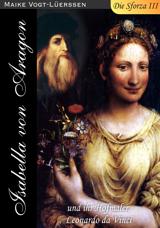
Die Sforza III: Isabella von Aragon und ihr Hofmaler Leonardo da Vinci
488 Seiten, 322 Abbildungen und Stammtafeln, €49.90 (Format 21 x 27 cm)
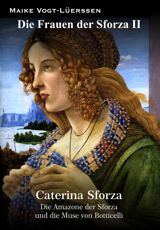
Die Frauen der Sforza II: Caterina Sforza - Die Amazone der Sforza und die Muse von Botticelli
nur als Buch (Farbband), bei amazon.de: 320 Seiten, mit Stammtafeln und 153 Bildern, Independently published, 1. Auflage 2021, ISBN 979-8-7119-9157-1, € 44,73
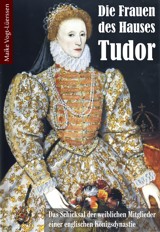
als Buch bei amazon.de: 552 Seiten, mit Stammtafeln und 292 sw Bildern, Independently published, 1. Auflage, ISBN 978-1-9768-8527-3, € 31,84 (großes Buchformat: 21 x 27 cm)
als E-Book bei amazon.de erhältlich, ca. 1.000 Seiten mit Stammtafeln und 292 Bildern, € 29,89

Frauen in der Renaissance – 30 Einzelschicksale
seit Oktober 2017 als Buch in überarbeiteter Version bei amazon.de erhältlich, 432 Seiten, mit 304 SW-Bildern, € 20,20; ISBN 978-1-5498-9445-9
ab Dezember 2014 als E-Book in überarbeiteter Version bei amazon.de erhältlich, mit 346 Bildern (davon 268 in Farbe), € 18,03

Die Frauen der Sforza I: Bianca Maria Visconti – Die Stammmutter der Sforza
nur als Buch (Farbband) bei amazon.de: 294 Seiten, mit Stammtafeln und 243 Bildern, Independently published, 1. Auflage 2020, ISBN 978-1-6515-0580-9, € 51,02

Margarete von Österreich – Die burgundische Habsburgerin und ihre Zeit
seit November 2017 als Buch in überarbeiteter Version bei amazon.de erhältlich, 492 Seiten, mit 216 SW-Bildern, € 22,06; ISBN 978-1-9731-9249-7
als E-BOOK bei amazon.de mit Stammtafeln und 219 Bildern, davon 149 in Farbe, Eigenproduktion 2014, € 18,41

Anna von Sachsen – Gattin von Wilhelm von Oranien
124 Seiten, mit Stammtafeln und 64 SW-Bildern, ISBN 978-1-9733-1373-1, 4. überarbeitete Auflage, € 7,80
bei amazon.de

Agrippina die Jüngere – Die große römische Politikerin und ihre Zeit
als Buch bei amazon.de: 260 Seiten, mit Stammtafeln und 59 SW-Bildern, ISBN 3-8334-5214-5, 2., überarbeitete Auflage, € 17,90
als E-BOOK bei amazon.de: mit Stammtafeln und 70 Bildern, Eigenproduktion 2017, € 13,53

Die Lieblingsrezepte meiner Familie – Liebe geht wirklich durch den Magen (3. Auflage)
bei amazon.de:126 Seiten mit farbigen und schwarz-weißen Bildern, Independently published, ISBN 979-8-7648-5958-3, € 13,28


Zeitreise 1 – Besuch einer spätmittelalterlichen Stadt
als Buch, Independently published, 264 Seiten, 93 SW-Bilder, € 12,54, ISBN 978-1-5497-8302-9
und als E-Book

Der Alltag im Mittelalter 352 Seiten, mit 156 Bildern, ISBN 3-8334-4354-5, 2., überarbeitete Auflage 2006, € 23,90